
17 Dec The AI Diary: Disruption of Society
Dec 17, 2025
Tech leaders promise a future of unprecedented abundance and wealth creation through AI. I argue that this is another illusion, similar to what was sold to us in the 1990s with NAFTA.
If you don’t remember NAFTA, here is a quick summary.
NAFTA
In the 1990s, we were promised that outsourcing manufacturing to developing countries like China and those in Southeast Asia through trade agreements such as NAFTA would create a world of abundance. The pitch was simple: we’d get cheap goods and everyone would be better off.
What actually happened?
While the promise partially came true — you can go to Walmart or Amazon and buy incredibly cheap goods — there was a darker side that wasn’t discussed upfront. NAFTA hollowed out the social fabric: the median worker stopped seeing upward mobility, people became more pessimistic about their economic futures, homeownership became increasingly difficult, and well-paying middle-class jobs disappeared. We got the cheap goods but lost much of the economic foundation that sustained communities.
We shifted from a society with a strong middle class to a society of consumers with a diminished middle class.
NAFTA 2.0
AI represents “NAFTA 2.0” — except instead of China appearing on the world stage to do manufacturing labor cheaply, a country of geniuses in a data center now emerges to perform cognitive labor for less than minimum wage. In essence, this is a flood of “AI immigrants” — millions of digital workers with Nobel Prize-level capabilities operating at superhuman speed.
This will inevitably wipe out much of what is left of the middle class.
The Mathematics Don’t Add Up
The optimistic vision assumes AI companies will generate so much wealth that universal basic income (UBI) or similar safety nets become feasible. But this assumption deserves serious skepticism:
- Will US-based AI companies voluntarily redistribute wealth globally to countries whose economies collapse when key job sectors disappear? Consider the Philippines, where a huge percentage of jobs are in customer service — what happens when that work is automated away? Will any AI company pay for the Philippines?
- Even domestically, will these companies willingly support higher taxes to fund large-scale redistribution, or will they use their influence to resist such measures?
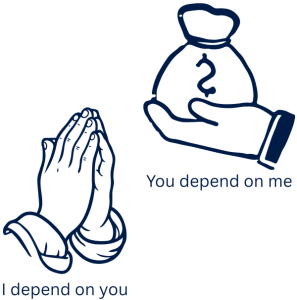
The incentive structure breaks down further when you consider that trillion‑dollar AI companies can massively influence governments through lobbying, far more effectively than ordinary citizens.
The Junior Worker Crisis
Law firms are already beginning to hire fewer junior lawyers because AI can outperform recent law school graduates on many routine tasks. This creates a dual crisis: law students are burdened with massive debt for degrees that no longer guarantee employment, while law firms lose their pipeline for developing future senior lawyers. You cannot have senior expertise without junior workers learning on the job.
This pattern of eliminating entry-level positions while automating foundational skills threatens intergenerational knowledge transmission across many professional fields. The result is a weakening of the social fabric and the potential emergence of a small elite managerial class.
The Political Paradox
Many billionaires in AI are now talking about student loan forgiveness — not purely out of altruism, but also because they recognize that burying junior workers in debt while eliminating their job prospects is a recipe for socialist or radical political movements to rise. When inequality grows too large, societies vote for dramatic change.
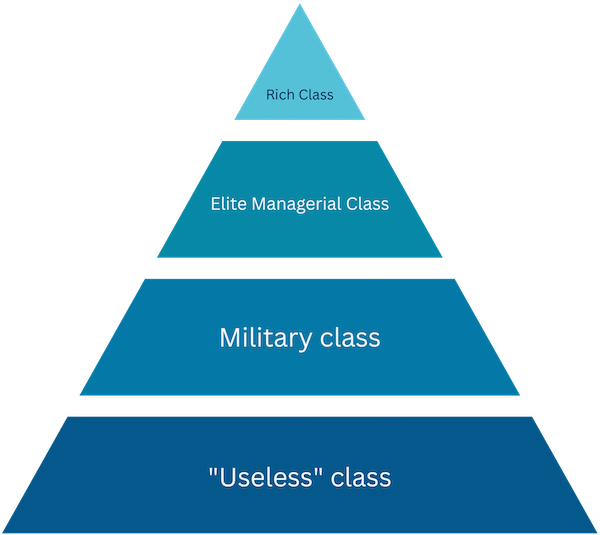
Yet this exposes a deeper problem: this may be one of the last moments when human political power, as traditionally understood, really matters. During the Industrial Revolution, workers could unionize and demand better conditions because factories needed them. In an AI-driven economy where most GDP could come from AI-centric firms, what leverage do humans have? The workforce risks becoming what Yuval Noah Harari calls “the useless class”.
Conclusion So Far
NAFTA 2.0
We are heading toward a NAFTA 2.0 scenario. We will have cheaper goods and services, but the class that can reliably pay for them — a broad, secure middle class — will erode as people become jobless or are forced into much lower incomes.
The Illusion of Universal Basic Income
There is talk about UBI, and even “UHI” (universal high income), but it is far from clear that large corporations will accept significantly higher taxes or deep redistribution to fund such schemes, especially given their growing political influence.
Left-Wing Movements Will Appear
Wiping out the middle class and creating a large “useless class” will almost certainly fuel new and stronger left‑wing political movements. When large numbers of people feel excluded from economic gains, demands for redistribution and systemic change become inevitable.
New Class Structure of Society
- Small rich class where most of the wealth is distributed
- Small elite managerial class
- “Useless” class
- Military class
Nation‑State vs. Big Capital
Strong government intervention in the movement of goods and in the decisions of large corporations, leading to open confrontation between the nation‑state and big capital, especially major financial institutions.