
21 Jan The AI Diary: The Internet Is Dead
Jan 21, 2026
The internet as we know it is changing before our eyes. This change is driven by two factors:
- Big tech companies developing AI solutions. Good examples include OpenAI, Gemini, Perplexity, and Claude.
- Human nature — our laziness and our desire to make life easier by finding efficient ways to do our work without spending too much time.
If all of this sounds too vague, let me explain briefly.
Zero-click Searches
The trend of users clicking less on external links is a well-documented phenomenon known as “zero-click searches”.
This is how a typical search used to work before the rise of the AI era.
You would open Google or another search engine, type a key phrase, and receive a list of results. Your task was to click on the links that appeared trustworthy and read information from different websites.
This is why businesses, institutions, and anyone seeking visibility on the internet needed a website. This is also why we used to hire agencies to build these websites for us. Later, platforms such as WordPress, Wix, Shopify, and others emerged, allowing people to build websites or online stores themselves. An entirely new ecosystem of industries and companies was created as a result.
However, with the arrival of AI, people realized they could save time. Instead of manually searching and reading multiple sources, they could simply ask an AI agent to do the searching for them and summarize the results.
A few seconds later, the user has what they need.
Of course, we can debate the quality of these results, since AI models may hallucinate and provide information that is completely inaccurate. But given human nature and our tendency toward convenience, many users are willing to overlook this risk.
The bottom line is that by the end of 2025, multiple statistical studies have shown that people are clicking on links and visiting websites less and less. Instead, they are increasingly relying on AI models for information.
Ask the AI Agent to Buy Things on Your Behalf
The Universal Commerce Protocol (UCP), announced by Google in January 2026 at the National Retail Federation (NRF) annual event, is an open standard designed to enable AI agents to seamlessly discover, interact with, and purchase products on behalf of users.
Let me put this in a few sentences using simple words. Every website or platform selling goods or services can implement the UCP protocol, which allows AI agents to read your database of products and services and make purchases on behalf of the user.
This basically means that users no longer need to type the web address of your online store — they can simply ask the AI agent to do it for them.
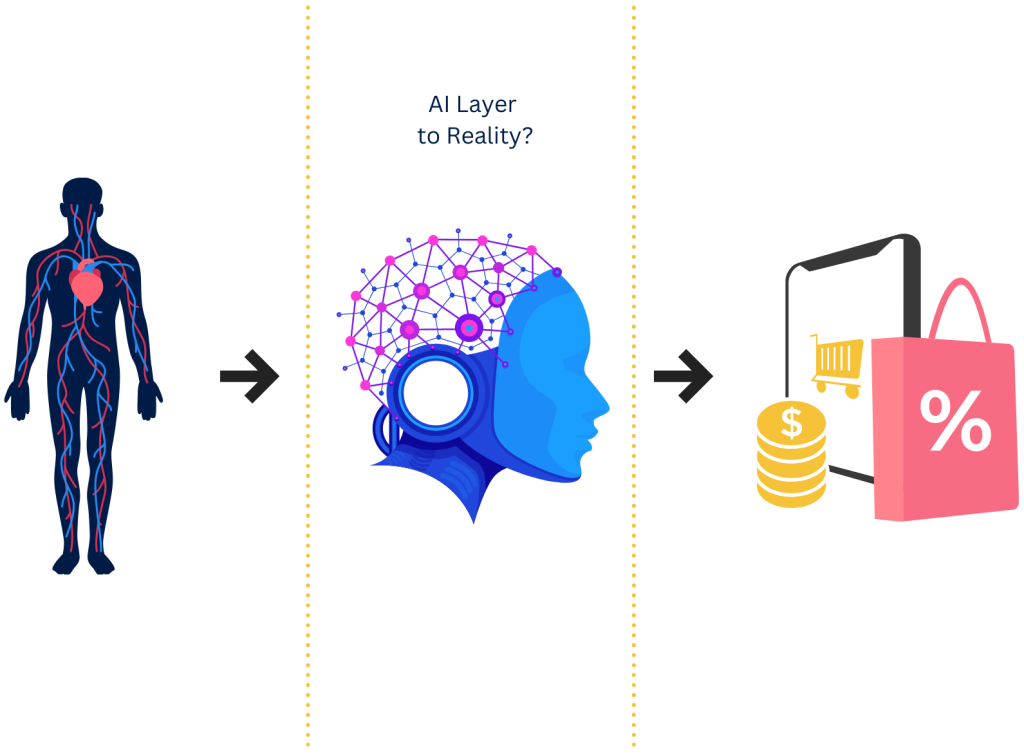
This is another indication that even websites like Airbnb may change in the future. If users no longer visit them directly, why would these platforms care about having a traditional website at all? Instead, they might just maintain a database hosted on a cloud server that is accessible to AI agents.
Prediction
Traffic
My personal view on what is going to happen with the Internet (among many other changes) is this:
Tools like Google Analytics will track not just geographical location, demographics, and other parameters of your website traffic, but they will also add one more parameter — Human or AI.
This will reflect the growing reality that websites are increasingly being visited by AI rather than humans. The moment is approaching when each of us will have a personal AI assistant that browses the Internet on our behalf. That will be the day when tools like Google Analytics notice a significant drop in traffic generated by humans and a corresponding increase in traffic generated by AI.
Websites
Websites will probably remain relevant because newspapers like the New York Times will want to maintain their brand in good shape. Besides, for older generations who are used to the Internet as it is now, websites are still a must.
However, for younger generations, that will probably no longer be the case.
This is why I think some websites will stop prioritizing hiring top designers or focusing on visuals. In fact, I suspect a new way of serving content will emerge. For the sake of example, let’s call it a “Data Broadcaster”.

Imagine you don’t need a website because people simply don’t visit it. Instead, you could build a Data Broadcaster optimized to provide information to AI agents in a well-digested and readable format.
You may no longer need a traditional online store — just a Data Broadcaster designed to attract AI agents and show them what you sell. With the help of the UCP protocol, these agents could then make purchases on behalf of the user.
The bottom line is that we are living in very interesting times. Years ago, I witnessed the birth of the Internet, but I never imagined I would witness such a profound transformation.